
After a long day at work, your eyes might feel gritty, tired, and a little sore. Reading might be more challenging, your vision could blur and clear when you blink, and squinting does not seem to help.
While screens do not harm your eyes themselves, they do have an effect on how you blink.
When you focus on a screen, you may blink half as often as usual, and many of those blinks are only partial, so your eyelids do not fully close. A complete blink is what spreads the oily outer layer of your tear film across the surface of your eye. Without that layer renewed every few seconds, tears evaporate faster than your body replaces them, and dry eye symptoms follow, like burning, stinging, redness, light sensitivity, and fluctuating vision.
You can often improve screen-related dryness by making small, steady changes to your routine. Here are six ways to protect your eyes before dryness becomes a regular problem.
1. Follow the 20-20-20 Rule

Every 20 minutes, look at something at least 20 feet away for 20 seconds. This gives your eye’s focusing muscle a chance to relax and helps your blink rate return to normal. Try adding reminders to your routine. Linking the break to tasks you already do can also help you remember.
2. Blink All the Way Down
If you blink often but do not close your eyes all the way, it does not help your tear film very much. The oil glands are along the edge of your eyelids, and your lids need to touch fully to release the oil and spread it over your eye.
Try gently closing your eyes, pausing for two seconds, squeezing lightly, then opening them a few times each hour. For people whose dryness comes from incomplete blinking, this is one of the best habits to develop.
3. Move Your Monitor Below Eye Level
The height of your screen affects how much of your eye is exposed to the air.
Looking straight ahead or slightly up makes your eyelids open wider, so more of your tears can evaporate. Set your monitor so the top is at or just below your eye level, letting you look slightly downward.
Keep the screen about an arm’s length away, usually 20 to 28 inches. Adjust the brightness to match the room and angle the screen away from windows and lights to reduce glare.
4. Change the Air Around Your Desk
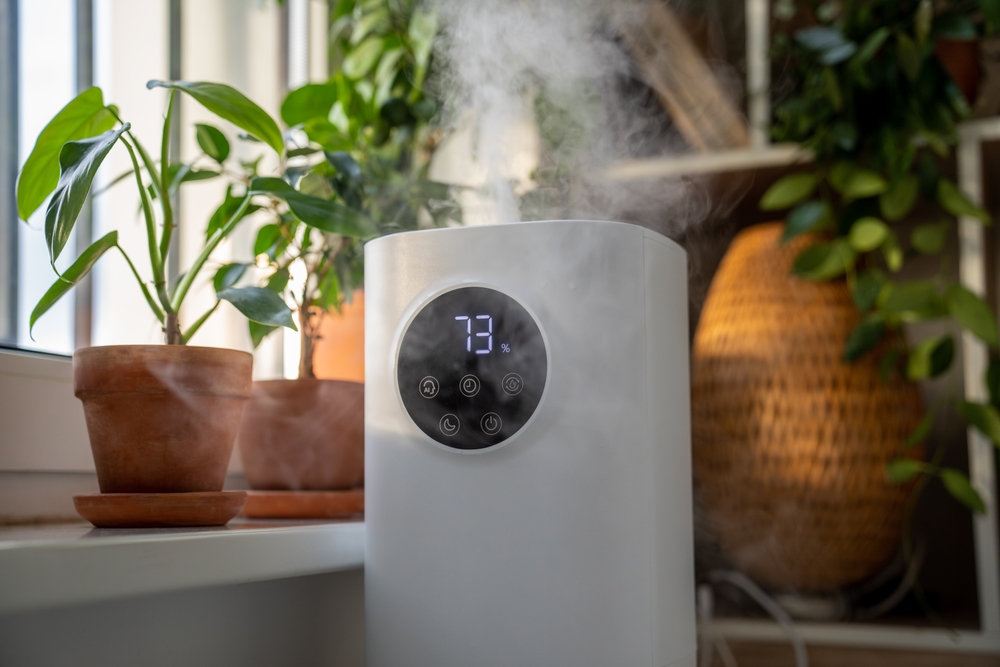
Air moving across your eyes makes tears evaporate faster. Ceiling vents and desk fans pointed at your face all dry your eyes out faster than your tears can keep up.
Point vents and fans away from your face, and think about using a small humidifier if your room is dry. Allergies and dry eye often happen together and make each other worse. If your symptoms keep coming back after you adjust the airflow, it is worth getting them checked out by your eye doctor.
Early dry eye symptoms can look like normal tiredness, so people often ignore them for a long time. The earlier you get treatment, the less likely you are to experience long-term symptoms.
5. Be Strategic About Eye Drops
Artificial tears can help, and while they give temporary relief and make your tear film work better for a short time, they do not fix the root cause of dry eyes.
If you use eye drops more than four times a day, pick a preservative-free kind, because preservatives can irritate your eyes if used often.
It’s also important to stay away from drops that promise redness relief. They shrink blood vessels, and the redness often comes back even worse after the effect fades.
If you need drops several times a day just to get through work, that is a sign your dryness is more than habits and eye drops can handle. This is a good time to see a dry eye specialist.
6. Have Your Tear Film Evaluated

A regular eye exam checks how well you see and if your prescription has changed, but it does not measure the quality of your tears. That requires a different test with special equipment.
A full dry eye exam might include infrared pictures of the oil glands in your eyelids, tests for tear quality, digital blink analysis, and special stains to show any damage to your eye surface. No single test is enough by itself. Looking at results from several tests together helps find out which part of your tear film is not working and why.
Dry eye testing is important because what you feel does not always match what the doctor sees. Someone with a lot of surface damage might only feel mild irritation, while someone with less obvious signs can feel very uncomfortable.
The dry eye program at Dell Laser Consultants was designed to address this gap, and its treatments are used by academic centers across the country.
Protecting Your Eyes from Screen Related Dryness Long Term
Screen-related dryness is usually easy to manage if you catch it early. However, if these changes do not solve the problem, it is important to find out what is causing your dryness, especially if you are considering vision correction in the future, since dry eye should be treated before procedures like LASIK. The dry eye team at Dell Laser Consultants can help figure out the cause and create a plan for you.
Do your eyes feel dry and irritated after a day at work? Book an appointment at Dell Laser Consultants in Austin, TX, today!