Most people think of cataracts as something they will deal with eventually, and they are usually right. Cataracts affect most people by age 75, and there is no medication or eye drop that can reverse them. The only treatment is surgery.
But what if you could correct your vision now and take cataract surgery off the table permanently? That is exactly what refractive lens exchange (RLE) does. By replacing the eye’s natural lens with an artificial one, RLE addresses refractive errors and presbyopia while eliminating the possibility of cataracts forming in the future.
Keep reading to learn why RLE is the only vision correction procedure that also prevents cataract surgery down the road!
What is Refractive Lens Exchange?

Refractive lens exchange is a procedure in which your eye surgeon removes the natural lens of the eye and replaces it with a permanent artificial lens called an intraocular lens (IOL). The IOL takes over the focusing work that your natural lens once performed, and depending on the type of IOL selected, it can provide clear vision at near, intermediate, and far distances.
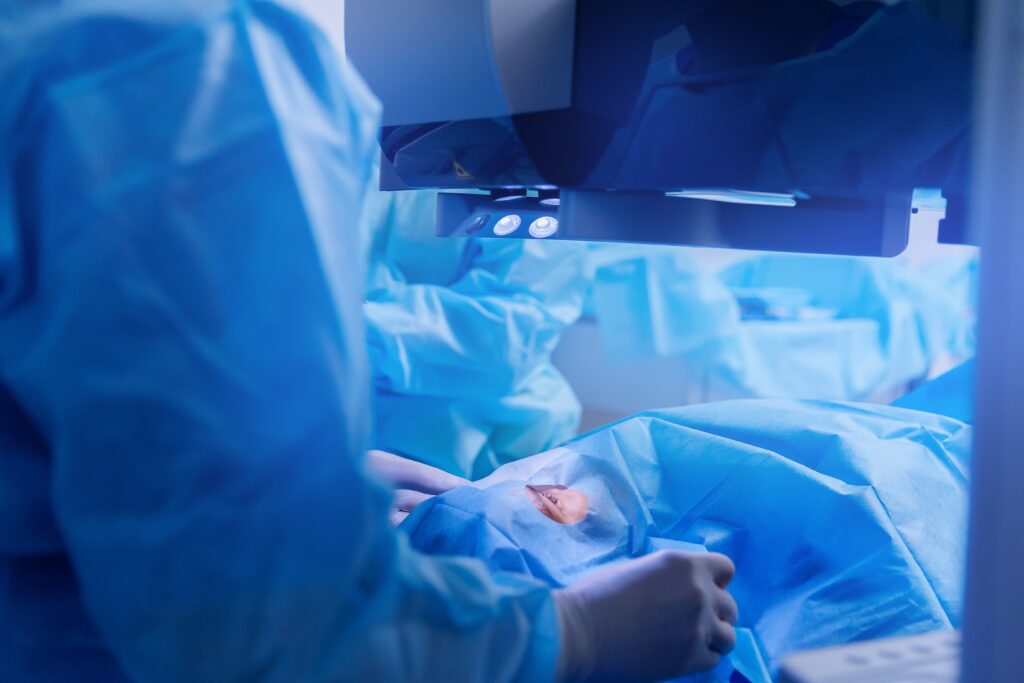
The procedure itself is virtually identical to cataract surgery. The same techniques, the same types of IOLs, and the same recovery process apply. The difference is timing and intent.
Cataract surgery is performed after a cataract has developed and begun to interfere with vision. RLE is performed before significant cataracts have formed, with the goal of correcting refractive errors like nearsightedness, farsightedness, astigmatism, and presbyopia.
RLE is typically recommended for patients over 40, particularly those dealing with presbyopia or those who are not ideal candidates for LASIK or PRK. Because the natural lens becomes less flexible with age and eventually develops a cataract, replacing it proactively with an IOL solves both problems at once.
What Causes Cataracts?
A cataract forms when proteins in the eye’s natural lens begin to break down and clump together. This process clouds the lens gradually, causing symptoms like blurry vision, increased glare, faded colors, and difficulty seeing at night. The changes happen slowly, often over years, and most people do not notice them at first.
Age is the primary risk factor. The proteins in the lens have been exposed to ultraviolet light, oxidative stress, and normal metabolic processes for decades by the time symptoms appear. Other factors like diabetes, smoking, prolonged steroid use, and eye injuries can accelerate the timeline, but even without these risk factors, cataracts will develop given enough time.
Cataracts are one of the leading causes of vision loss worldwide. There is currently no way to prevent them from forming in the natural lens. Once they reach a point where they affect daily life, cataract surgery becomes the only effective treatment. This is precisely why removing the natural lens before a cataract matures, as RLE does, carries such a significant long-term advantage.
How RLE Permanently Prevents Cataracts

The reason refractive lens exchange prevents cataracts is straightforward: cataracts can only develop on the eye’s natural lens. Once that lens has been removed and replaced with an artificial IOL, there is no remaining biological tissue for a cataract to form on.
An IOL is made of synthetic materials like acrylic or silicone. These materials do not break down, cloud, or degrade the way natural lens proteins do. The IOL implanted during RLE is permanent and designed to last a lifetime without replacement.
Some patients develop posterior capsule opacification (PCO) months or years after lens replacement. PCO occurs when the thin membrane that holds the IOL in place becomes slightly cloudy. It is sometimes called a “secondary cataract,” but it is not actually a cataract. PCO is easily treated with a quick, painless laser procedure called a YAG capsulotomy, which takes just a few minutes and restores clear vision immediately.
For patients who are good candidates for refractive lens exchange, the procedure effectively closes the door on cataracts for good. No waiting for symptoms to worsen, no second surgery years down the line, and no gradual decline in vision quality.
How Your IOL Choice Shapes Your Cataract-Free Future
Because the IOL you receive during RLE is the same lens you would receive during cataract surgery, the choice of lens matters.
This is the lens you will see through for the rest of your life, with no need for a second procedure. That makes the decision about which IOL to select especially important.
A standard monofocal IOL corrects vision at one set distance, usually far. Patients who choose a monofocal lens will still need reading glasses for near tasks.
Premium IOLs, on the other hand, offer a wider range of clear vision. Multifocal and trifocal lenses provide sharp focus at near, intermediate, and far distances, while extended depth of focus lenses create a smooth, continuous range of vision.

Dell Laser Consultants offers some of the most advanced IOL technology available, including the Light Adjustable Lens, which is the only IOL that can be fine-tuned after surgery using non-invasive UV light treatments. This allows patients to customize their vision to their exact preferences once their eyes have healed. Other premium options include the PanOptix trifocal, the Vivity extended depth of focus lens, and toric lenses for patients with astigmatism.
The specialists at Dell Laser Consultants work with each patient to determine the best lens option based on their visual goals, lifestyle, and eye anatomy. Since this single lens choice defines your long-term visual outcome, having an experienced surgical team guide that decision is essential.
Clear Vision Now, No Cataracts Later
Refractive lens exchange offers something no other vision correction procedure can: improved vision today with the guarantee that cataracts will never be a concern. Patients who choose RLE are making a single, proactive decision that addresses both their current vision needs and a condition that would otherwise require surgery in the future.
With access to advanced IOL technology and premium lens options that can reduce or eliminate dependence on glasses, Dell Laser Consultants provides patients with the tools and expertise to make the most of that decision. For patients over 40 who want lasting visual freedom, RLE is one of the most practical and forward-thinking choices available.
Want to find out if refractive lens exchange is the right choice for your vision and your future? Schedule a consultation at Dell Laser Consultants in Austin, TX, today!