
Glaucoma is a group of eye diseases that damage the optic nerve, the bundle of nerve fibers that carries images from your eye to your brain. In most cases, that damage comes from pressure building up inside the eye.
There are two main forms of glaucoma, and while both threaten your sight, they develop in very different ways. One progresses so quietly that most people never feel a thing, while the other can strike suddenly with severe pain.
Keep reading to learn how each type develops, who is most at risk, and how eye doctors treat them.
What Is the Drainage Angle and Why Does It Matter?
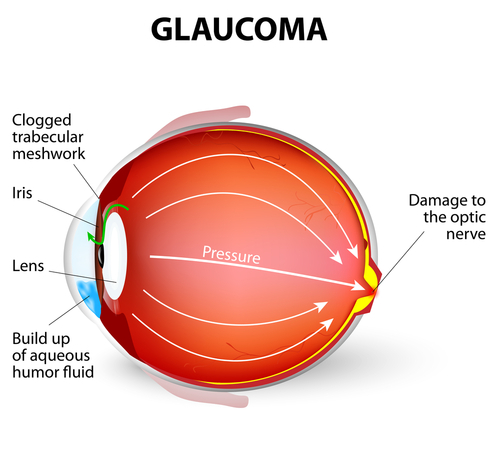
Your eye constantly produces a clear fluid that nourishes the front of the eye and helps it keep its shape, called aqueous humor. Fresh fluid flows in while older fluid drains out, keeping the pressure inside your eye steady.
That fluid exits through the drainage angle. The angle is located in the spot where the iris (the colored part of your eye) meets the cornea. Inside this angle is a spongy tissue called the trabecular meshwork, which works like a filter that fluid passes through on its way out.
Whether this angle stays open or becomes blocked is what separates the two main types of glaucoma.
What Is Open Angle Glaucoma?
Open angle glaucoma is the most common form of the disease, accounting for the vast majority of glaucoma cases. In this type, the drainage angle looks normal and stays open, yet fluid still doesn’t drain the way it should.
Over many years, the trabecular meshwork becomes less efficient at letting fluid pass through. Think of a sink drain that slowly clogs even though nothing is covering the opening. As fluid backs up, eye pressure rises gradually and puts steady strain on the optic nerve.
Some people develop open-angle glaucoma even with normal eye pressure, a form called normal-tension glaucoma. That is why a glaucoma evaluation involves more than a pressure check, and eye doctors also examine the optic nerve and test your side vision.
Open-angle glaucoma causes no pain, redness, or sudden changes. Vision loss usually begins in your peripheral (side) vision, and your brain fills in the gaps so well that you may not notice anything is missing. By the time central vision is affected, significant damage has often already occurred, and that damage is permanent.
Routine eye exams are the most reliable way to catch open-angle glaucoma early, since an eye doctor can spot changes in pressure and the optic nerve years before you would.
What Is Angle Closure Glaucoma?

Angle closure glaucoma happens when the iris bulges forward or sits too close to the drainage angle, physically blocking fluid from leaving the eye. This type is less common than open-angle glaucoma, and it can appear in two forms.
In acute angle closure, the drainage angle closes suddenly and eye pressure spikes within hours. It is a medical emergency because permanent vision loss can happen quickly without treatment.
Symptoms tend to come on fast and often include the following.
- Severe eye pain, usually in one eye
- Headache
- Blurred vision
- Halos around lights
- Eye redness
- Nausea or vomiting
An attack can be triggered when the pupil widens, such as in a dark room or after taking certain medications. If you notice these symptoms, go to an emergency room or call an eye doctor right away rather than waiting to see if they pass.
Angle closure can also develop gradually as the angle narrows over time. Chronic angle closure often causes few or no symptoms, so it can go unnoticed in much the same way as open-angle glaucoma. An eye doctor can check whether your angle is narrow during an exam using a special mirrored lens, a test called gonioscopy.
How Are Open Angle and Angle Closure Glaucoma Treated?
Neither type of glaucoma can be cured, and unfortunately treatment can’t restore lost vision. The goal is to lower eye pressure so the optic nerve is protected and you keep the sight you still have.
Treating Open-Angle Glaucoma
Prescription eye drops are a common first step, though many patients struggle with daily use or side effects. Selective laser trabeculoplasty (SLT) uses gentle laser energy to help the trabecular meshwork drain more effectively. Dell Laser Consultants was the first practice in Texas to offer direct selective laser trabeculoplasty (DSLT), which treats the drainage system in seconds without touching the eye.
Minimally invasive glaucoma surgery (MIGS) is another option for some patients. These procedures use tiny implants or instruments to improve fluid outflow, and they are often performed alongside cataract surgery. More advanced cases may call for traditional procedures, such as a trabeculectomy or tube shunt.
Treating Angle Closure Glaucoma
An acute attack requires medications to bring pressure down quickly. Doctors then typically perform a laser peripheral iridotomy, which creates a tiny opening in the iris so fluid can flow around the blockage. Because the other eye often shares the same narrow anatomy, it may be treated as a precaution.
Removing the eye’s natural lens can also open a crowded angle by creating more room in the front of the eye.
For patients who also have cataracts, cataract surgery may lower eye pressure while clearing up cloudy vision.
Protecting Your Vision With Early Glaucoma Detection

Open-angle and angle-closure glaucoma differ in how fluid gets trapped inside the eye. In open-angle glaucoma, the angle stays open but drains poorly, causing slow, painless vision loss. In angle-closure glaucoma, the iris blocks the angle, leading to either a sudden emergency or a gradual narrowing with few symptoms. Apart from an acute attack, both types can damage your vision long before you notice anything is wrong.
That is why a comprehensive eye exam is the most reliable way to catch glaucoma early. And because glaucoma damage is permanent, early detection gives you the best chance of keeping your vision.
The eye doctors at Dell Laser Consultants provide specialized glaucoma care, including advanced laser treatments and MIGS, to help patients protect their sight over the long term.
Concerned about your risk for glaucoma? Schedule an appointment at Dell Laser Consultants in Austin, TX, today!