
The thought of choosing an artificial lens for your own eye can sound intimidating, but it is one of the most empowering parts of cataract surgery. The right lens can reduce how much you depend on glasses and sharpen the vision you use every day. You have more control over your vision than most people expect, and the choices have never been better. Keep reading to learn how the different intraocular lens options compare and how to find the one that fits your eyes and your goals!
What Is an Intraocular Lens, and Why Does the Choice Matter?

An intraocular lens, or IOL, is an artificial lens that replaces the eye’s natural lens during cataract surgery. Once a cataract clouds your natural lens, that lens has to come out, and the IOL takes over the job of focusing light onto your retina so you can see clearly again.
What makes this different from picking glasses is permanence. You can update your glasses prescription every year, but an IOL is meant to stay in your eye for the rest of your life. That single fact is why the lens you choose shapes your vision for years and why it pays to understand the cataract surgery process and your options before surgery day arrives.
How to Choose the Right Lens for You
When patients ask which lens is best, they usually expect to hear a brand name. The more useful question is how much you want to depend on glasses after surgery, and what your eyes will actually allow.
Those two factors do most of the work in narrowing the field. Someone happy to keep a pair of reading glasses on the nightstand has different needs than someone who wants to read a menu, check a phone, and drive at night without reaching for anything.
Your eye’s shape, the health of your retina and cornea, and any existing conditions also rule certain lenses in or out. The wide range of IOL designs available today exists precisely because no single lens is right for every eye. The sections below are organized around that core question, moving from lenses that do one job well to lenses that try to do several.
Lenses That Cover a Fuller Range of Vision

If your goal is to spend as little time as possible in glasses, the conversation shifts toward multifocal and extended depth of focus lenses.
Multifocal IOLs have multiple focusing zones built into a single lens, which lets your eye see near, intermediate, and distance. Extended depth of focus lenses stretch one continuous range of clear vision, which tends to give smooth intermediate sight for tasks like working at a computer.
These lenses fall into the category that many practices call premium, and they appeal to patients who want freedom from glasses for most daily activities.
The advantages of a premium IOL are real, but they come with some potential trade-offs worth knowing in advance. Because these lenses split or stretch light to cover more distances, some patients notice glare, halos, or rings around lights at night, especially in the first months as the brain adapts. Most people adjust well, and many would choose the same lens again. The right fit depends on how much you value range over the simpler optics of a single-focus lens.
Lenses That Correct Astigmatism
A toric IOL is a lens designed to correct astigmatism. Correcting astigmatism this way is one of the best steps you can take toward reducing your reliance on glasses after surgery.
The Lens You Can Fine-Tune After Surgery
For patients who worry about committing to a result before they can test it, the Light Adjustable Lens is a great option. It is the only IOL that can be customized after it is already in your eye. The lens contains a photosensitive material that responds to ultraviolet light. After your eye heals, your surgeon uses a series of brief, non-invasive light treatments to refine your prescription, and you get to preview the changes before they are locked in.
How Your Surgeon Helps You Decide
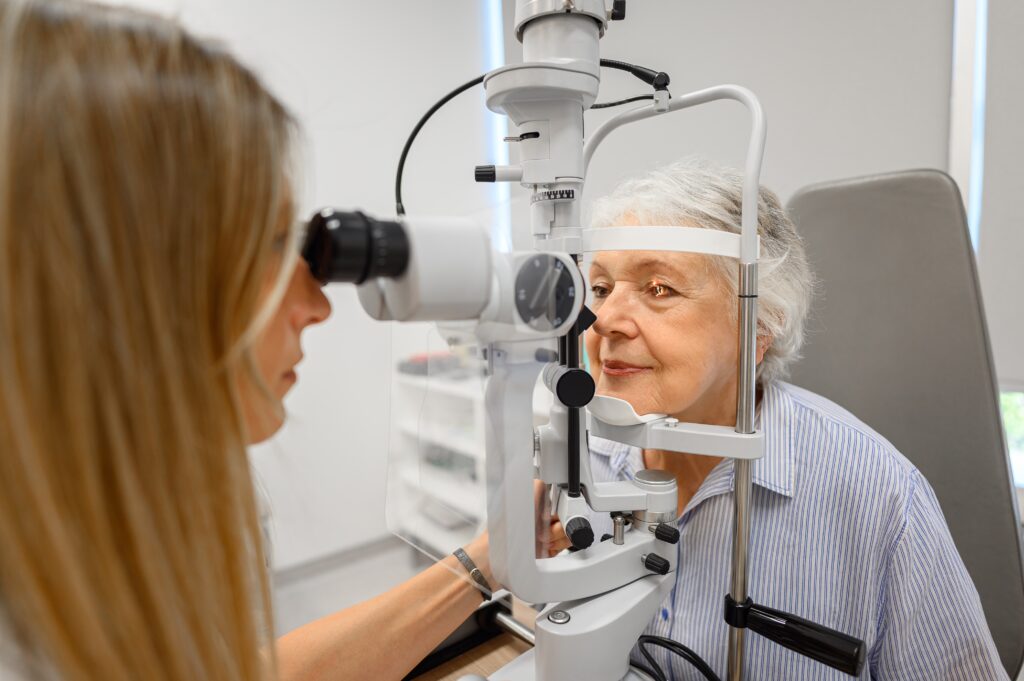
The best decision rests on details only an exam can reveal. During your consultation, your surgeon weighs your lifestyle and hobbies, your visual goals, the health and anatomy of your eyes, and your budget, since insurance typically covers a standard monofocal lens while premium options carry added cost.
A patient who golfs and drives at night has different priorities than one who reads for hours and rarely drives after dark. Your eye measurements matter just as much, since conditions affecting the retina or cornea can change which lenses are safe and effective for you.
This same evaluation applies if you are considering refractive lens exchange, a procedure nearly identical to cataract surgery but performed before a cataract develops. In both cases, the goal is to match the technology to the eye.
The surgeons at Dell Laser Consultants have helped many Austin patients sort through these choices and land on a lens that fits their lives. With the right guidance, what feels like an overwhelming decision becomes a clear one.
Ready to compare your intraocular lens options with an experienced surgeon? Schedule a consultation at Dell Laser Consultants in Austin, TX, today!